High-Pressure Drain Jetting
Jetting is particularly useful when the job is not merely to make a hole through a blockage but to wash grease, silt and softer deposits from the inside of the pipe.
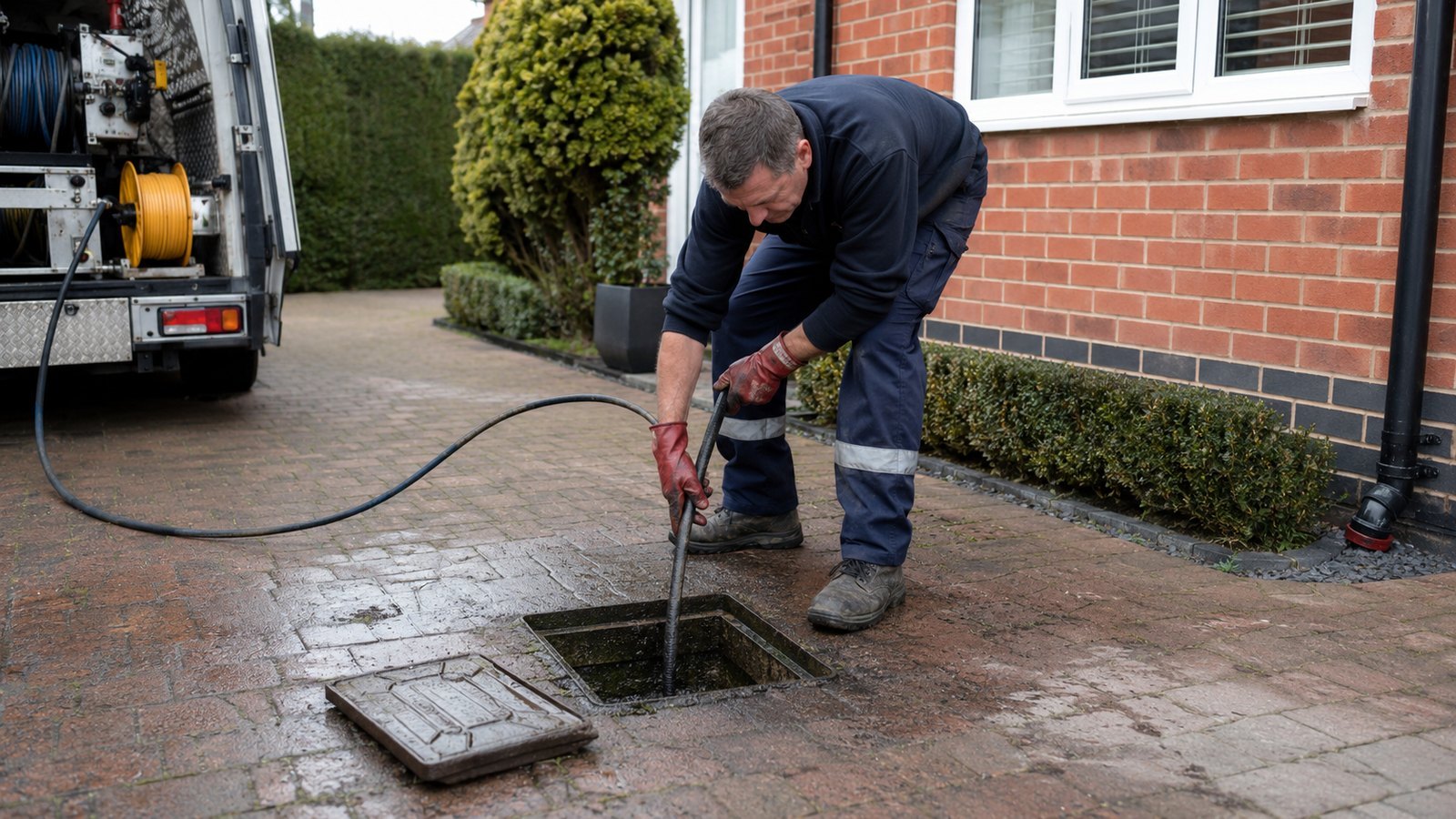
How the hose moves through the drain
Rear-facing jets help pull the hose along the pipe while directing loosened material back towards the access point. Different nozzles can be used for different cleaning tasks.
What jetting is good at
- grease and fat deposits
- silt and soft debris
- some root masses when suitable cutting equipment is used
- residue left after a blockage has been opened
What jetting will not fix
Water pressure cannot rebuild a missing section of pipe, correct a severe collapse or permanently seal an open joint. If roots return, or the same point keeps catching solids, investigation of the underlying defect may be more useful than repeated jetting.
Good jetting is more than turning up the pressure
Effective jetting also depends on nozzle choice, water flow, access and knowing what the pipe is made from. A nozzle suited to soft grease is not necessarily the right tool for roots or hard deposits. On very old, fragile or already fractured pipework, aggressive cleaning without understanding the condition of the drain can be unhelpful.
After a recurring blockage has been cleaned, check whether the pipe is genuinely clear. A camera should then be able to show the joints and pipe wall well enough to see why waste was catching there.
Get the drainage work priced
MyJobQuote can invite up to three local drainage contractors to quote after you provide details of the problem. Their quotations and proposed work should be considered on their own merits.
Invite contractors to quoteMyJobQuote is an independent third-party service. Any quotation or contract is with the contractor concerned.